From Unwind to Rewind
Web Handling for Converting Lines
GFM designs and builds the complete web path of a converting line: unwinding, tension control, web guiding, spreading and rewinding. We build new lines and retrofit running ones. Tell us your material, web width and line speed, and we will tell you whether it can be built, and how.
Over 40 years of experience · over 1,000 projects realised · Engineered & Made in Germany

Web Handling in a Converting Line
Web handling guides, tensions and transports a continuous web through a converting line so that it stays flat, on track and under controlled tension from unwind to rewind. A web is any flexible material that runs from a roll: paper, film, nonwoven, textile or a laminate of these.
Every web handling system has three parts: the unwind that holds and brakes the roll, the web path that carries it through the process stations, and the rewind that winds the finished reel or passes it on.
Within the web path, three jobs decide whether the line holds its tolerances: tension control keeps the pull steady, web guiding keeps the web on track, and spreading keeps it flat and free of wrinkles. How each is set depends on the material, which is why we design the web path around your web rather than around a standard layout. How a given material runs is covered on the paper, nonwoven and film pages.
Web handling keeps the web under control; web converting is the processing that turns it into a product. This page is about the first.
Overview
Working Width and Line Speeds
The wider and faster a web runs, the harder it is to keep it flat and on track. The table below is the range our lines are built within.
| Parameter | Range |
|---|---|
| Working and roll width | up to 4,000 mm |
| Web speed | up to 400 m/min |
| Material thickness | 0.02 to 5 mm |
| Materials | nonwovens, paper, films, fibre- and cellulose-based materials, textiles, laminates and composites, technical webs |
| Market approval | UL or CSA for North America, where required |
These values are the range we build within, not fixed limits. If your web sits outside them or you are unsure, ask anyway.
Every line is a one-off: we match the web width, the speed and the guiding to your material.
Web Handling Equipment Integrated into Your Line
GFM selects proven web handling components and takes responsibility for how they work together in your line, so you deal with one supplier for the whole web path rather than matching parts yourself. We integrate the rollers, drives, sensors and controls into one system and commission it as one.
Unwinding
The unwind holds the roll and controls its braking and tension. An autosplicer changes rolls without stopping the line, so a roll change costs no production time.
Rewinding
The rewind winds the web into an even, firm reel at the end of the line, so the finished reel can be shipped and run downstream without telescoping.
Tension Control
Tension is held zone by zone with dancer rolls and load cells, matched to how your material stretches and how much pull it takes. Steady tension is what lets the line hold its tolerances at full speed.
Web Guiding and Edge Control
Web guiding keeps the web in its lane and feeds it into the process stations in register, which reduces trim waste and scrap from a wandering web.
Spreading and Wrinkle Control
Spreader rolls and similar elements pull the web flat before critical stations, so cutting, laminating and winding stay free of creases.
Transport and Transfer
Driven rollers and guided transfers carry the web between stations and hand it to the next step, including between a continuous and an intermittent process, so delicate webs come through without marks or tears.
Solutions Beyond the Standard
When a standard line cannot keep your web flat, on track and at stable tension, we design the web path around that behaviour and build it as a special-purpose line for your material. Three cases lead to a custom web handling solution again and again:
- A difficult web. A material that is very thin, stretchy, delicate or uneven does not run on a line built for ordinary material. The web path has to be designed around how it actually behaves.
- Full width and speed at tight tolerances. At the top of your width and speed range, tension and register are hardest to hold. A line built for your figures keeps the web under control where a general-purpose one drifts.
- Several webs in one line. When different webs come together in a single line, each needs its own guiding and tension before they meet. Bringing them together cleanly is work a catalogue machine does not do.
We check whether your web can be run before we build, and we tell you what it takes.
Fixing Wrinkles and Tension Loss on Existing Lines
Wrinkles, tension swings, wandering webs and telescoping rolls can often be solved on the running line, including a line built by another manufacturer. We work across the full web path rather than a single roller.
From there we retrofit what the line needs: a tension control zone, a web guide, an autosplicer, or a module that rebuilds the line for a new material. The real obstacle is rarely the mechanics. It is making the new module work with the existing controls, and that is the part we engineer.
You keep one point of contact afterwards, with genuine spare parts and service from engineering to after-sales, even when the original builder is gone.

Industries
Web handling is the same discipline in every industry; what changes is the material and the product made from it. Follow the links below to the applications in your field.
Medical
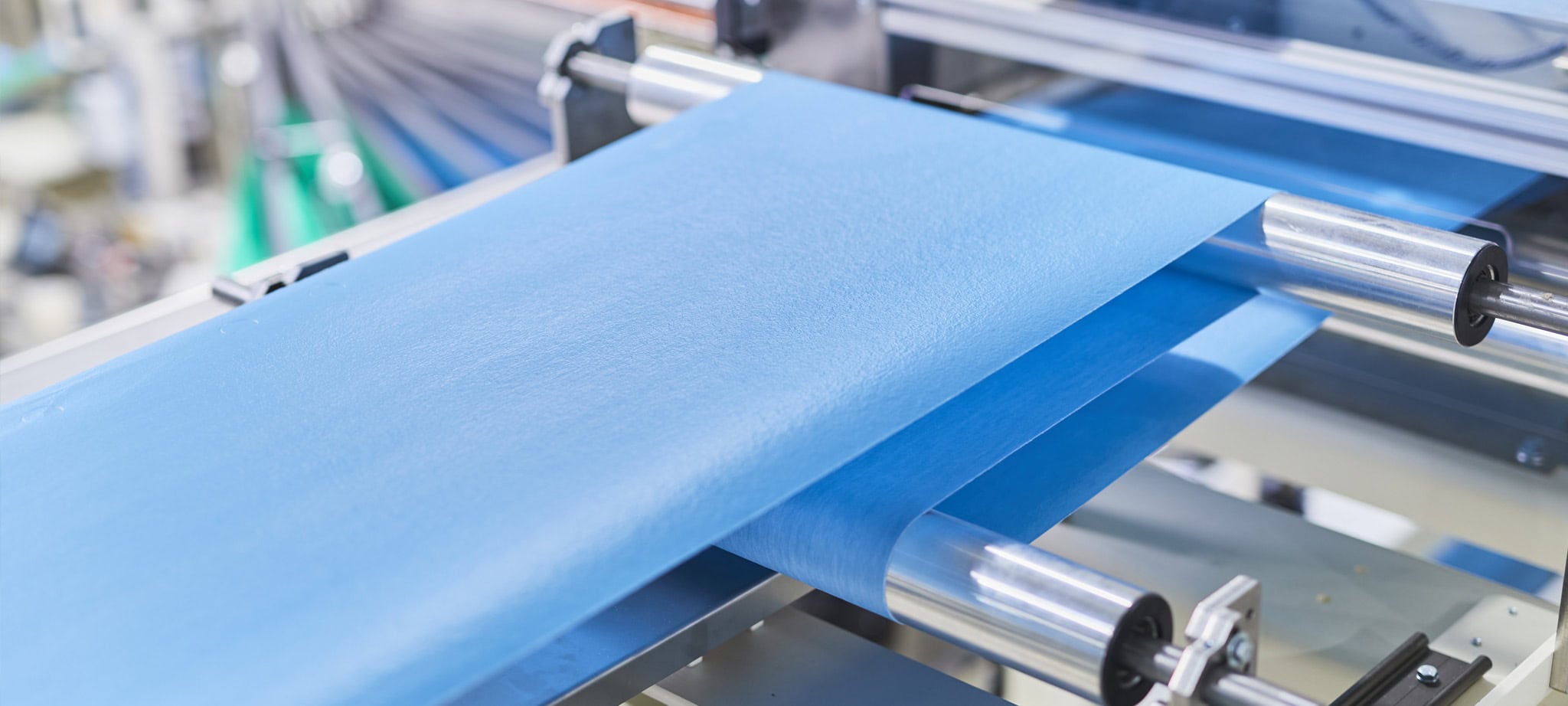
Nonwoven and film webs become surgical drapes, gowns and other single-use medical products.

Hygiene and Care
Nonwoven and tissue webs run into wet wipes, dry wipes and care products.

Filtration
Membrane and filter webs are wound and converted into filter media, including spiral-wound membrane filters.
Food
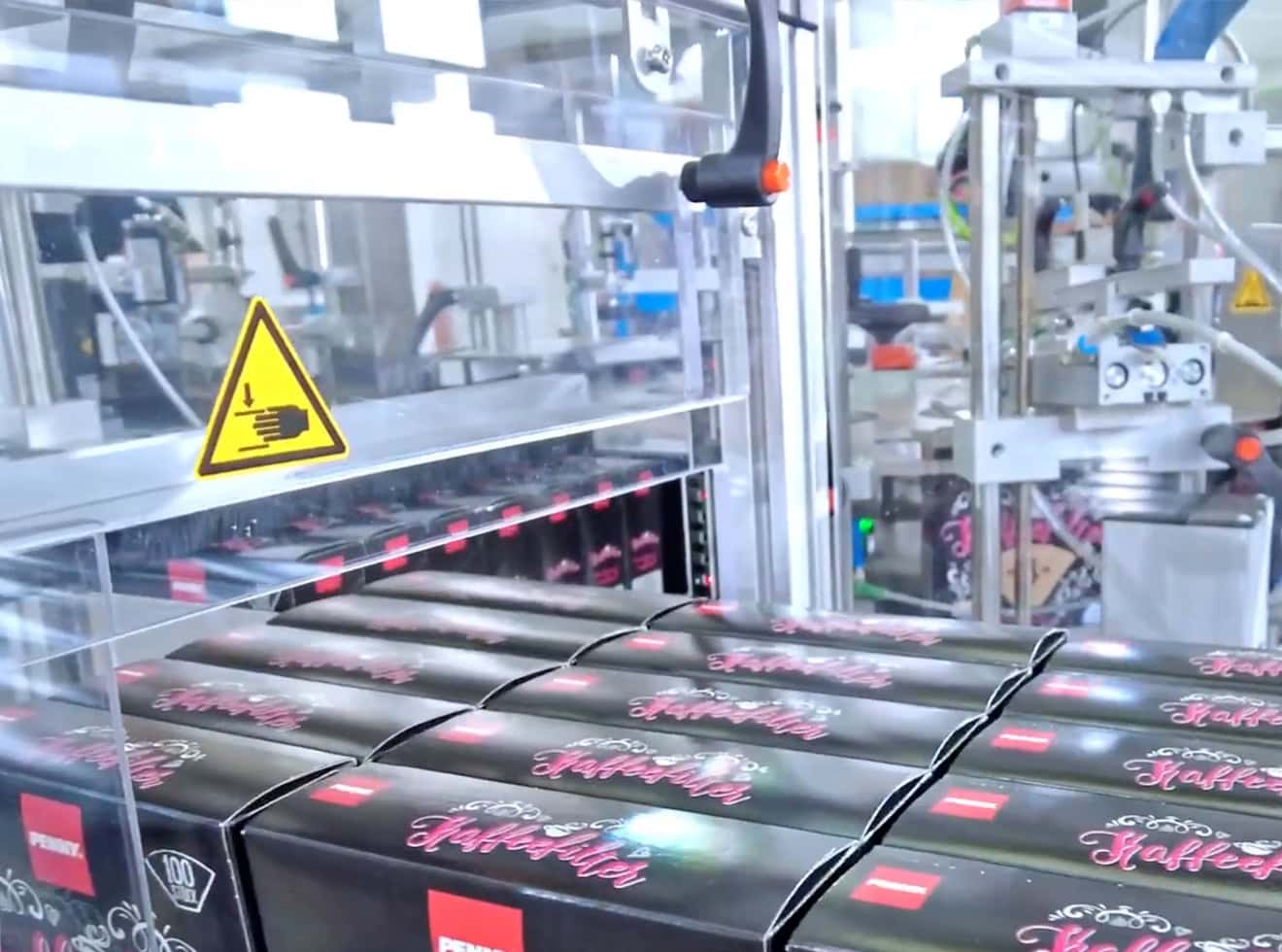
Paper and cellulose webs become coffee filters, baking papers and absorbent pads.
Technical and component webs run on GFM lines too. What decides the line is the product you make from the web, whatever your industry. If you produce in another field, start from the industries overview.
Tell Us about Your Material and Line Speed
Your material, web width and line speed are enough for a first assessment, and the enquiry goes straight to the engineers who design the web path.
FAQ: Web Handling Systems and Retrofits
Do You Supply Web Handling Components or Complete Systems?
We design and integrate complete web handling systems, and we also build a single module for an existing line. We select proven components, from web handling rollers and guides to tension controls and sensors, and take responsibility for how they work together with the drives and controls. One party is then responsible for the whole web path, from specification to commissioning. When you only need to close one gap in a running line, we supply and integrate that module alone.
Can You Improve Web Handling on a Line from Another Manufacturer?
Yes. We work on lines we did not build, including lines whose original manufacturer is no longer in business. What we need first is access to the running line and whatever documentation exists; from a survey of the web path we give a clear feasibility answer before any rebuild. The harder part is usually matching a new module to the existing controls, and that is where our engineering goes. Genuine spare parts and service continue afterwards.
What Causes Wrinkles, Tension Loss and Telescoping Rolls?
Most web faults come back to tension and alignment. Wrinkles form when the web is not spread flat or the rollers are not parallel. Tension loss comes from unsteady braking or drive control between zones. Telescoping rolls come from winding at the wrong tension profile. Because the cause is usually upstream of where the fault shows, we trace the full web path rather than the station where the mark appears. The right fix depends on the material, the width and the speed.
Can You Handle Very Thin, Stretchy or Delicate Webs?
Yes. The material decides the configuration, so a very thin, stretchy or delicate web sets how we build the unwind, the tension zones and the guiding. Our build range runs from 0.02 to 5 mm in thickness and up to 4,000 mm in width, and within that we design the web path around how your web behaves. If you are unsure whether your web can be run, we check the feasibility before anything is built.
Where Do You Deliver, and Do You Build to UL or CSA?
GFM has realised over 1,000 projects in Europe, Asia and the Americas and delivers to North America with UL or CSA, where required. After handover you keep one point of contact. Service covers remote access over a secure VPN connection, engineers on site, and genuine spare parts, dispatched the same day when ordered by 2 pm. Engineering, installation, commissioning, training and after-sales come from one supplier, so you have a single party responsible for the line over its whole life.
Tell Us Which Web You Need to Run
Tell us the material, the web width and the line speed, and we come back with a feasibility assessment.
Let’s Talk about Your Web Handling
Write to us and we will get back to you quickly.