Paper, nonwoven, film and laminate
Slitting Modules for Custom Converting Lines
GFM builds slitting into custom converting lines and retrofits slitting modules into lines that already run, with the cutting method matched to your material. Tell us your material and the finished widths you need, and we will tell you whether it can be built, and how.
More than 40 years in converting machinery · More than 1,000 projects delivered worldwide · Engineered and made in Germany.
Overview
Working Range of GFM Paper and Web Slitting Machines
These figures show the window we build slitting within, as a station in a new line or as a module added to a line that already runs. They are the range we usually work in, so if your material or your widths sit outside it, or you are not sure where they land, ask us anyway.
| Parameter | Range |
|---|---|
| Working width | up to 4,000 mm |
| Line speed | up to 400 m/min |
| Material thickness | 0.02 to 5 mm |
| Market approval | UL or CSA for North America, where required |
Every line is a one-off. Web width, speed and web handling are set to the material you slit and the widths you need.
Slitting Method Matched to Your Material
Which method cuts your web is decided by the material and the edge your downstream process needs. The table below sets out the three cutting methods used in web slitting and what each one suits. We specify the method your material needs and build the slitting station around it.
| Method | How It Cuts | Suits | Limits |
|---|---|---|---|
| Razor | A fixed blade parts the running web | Thin films and film laminates; simplest to set up | Not for thick materials, less precise on heavier webs |
| Shear | Two rotating circular knives cut like scissors | Almost any web, the cleanest edge, little dust | Higher investment, more demanding to set and run |
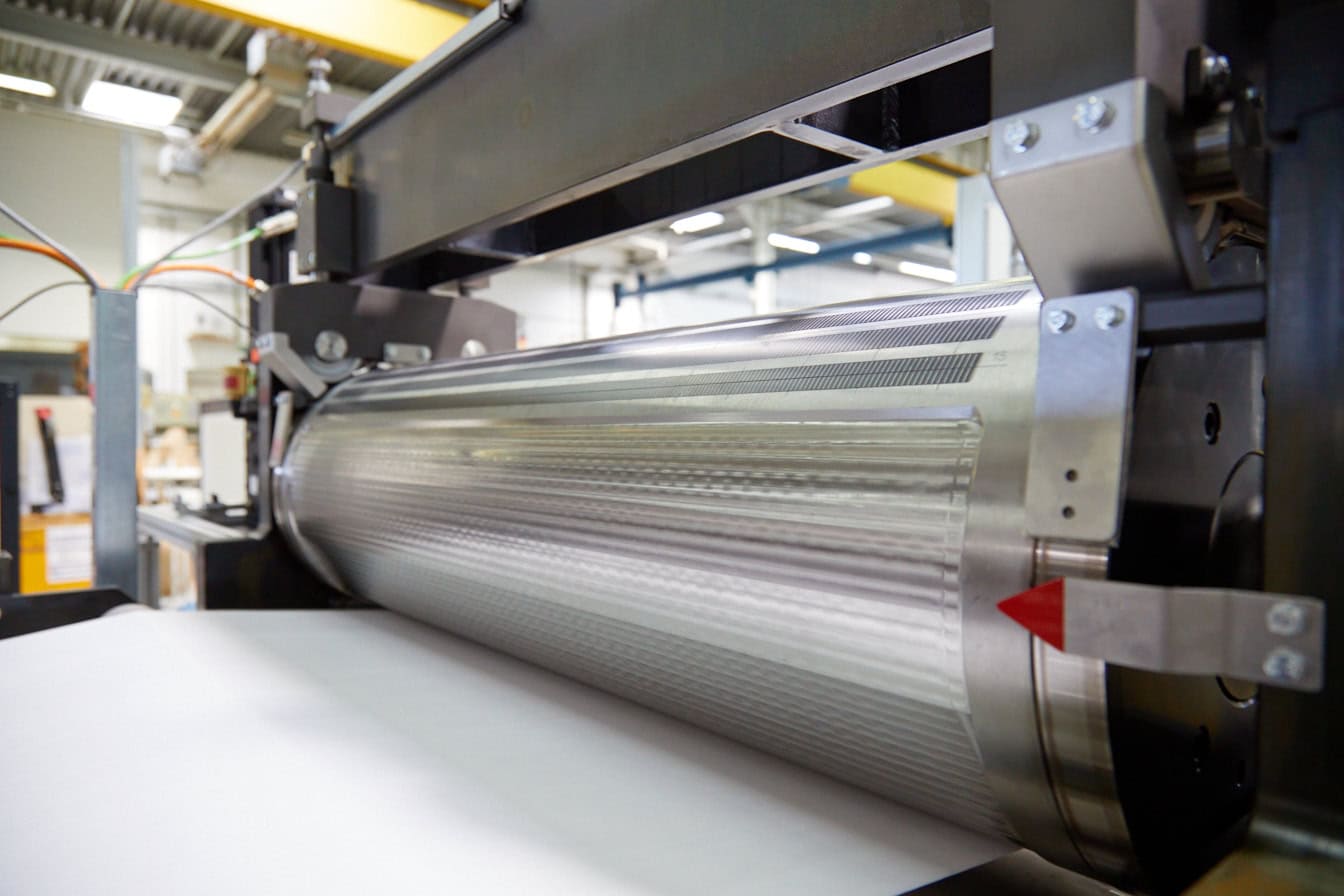
| Crush (score) | A blade presses the web against a hardened anvil roll | Nonwovens, coated and abrasive webs, thick laminates; quick to set up | Lower edge quality |
For nonwovens, coated webs and thick laminates, crush cutting is the usual choice, and it is a proven approach on our lines, where a clean, low-dust edge counts. Which method fits your product depends on the material, its thickness, the edge quality your process needs and how much dust it can tolerate. We settle that at the start of a project, before the line is designed. How individual materials run is shown on the pages for nonwoven converting and film converting.
Slitting as One Station in Your Converting Line
We build slitting as a station inside the line: the web is unwound, processed and slit lengthways in a single pass, then wound or passed on as a finished roll. That saves a separate rewinding and slitting run and the handling of rolls between machines.
What runs before and after the slit in the same line follows your product: unwinding and splicing, folding, laminating, perforating, cross-cutting and winding. Because each step is a module in its own right, a slit can be added to a line that already runs.
The hard part of slitting is the web handling. Tension, web guiding, spreading the web before the cut and winding the finished rolls without telescoping all decide the quality of the edge. Our core is guiding roll materials with very different behaviour safely through the line. Thickness, grammage, stretch and surface each change how the web must run, so the line is designed around them. Spreader rolls and the other web-handling components sit in the line where the material needs them. See the individual modules for the stations a line can carry.
Roll Slitting for Paper and Nonwoven Fabric
Our lines slit paper, nonwoven fabric, film and laminate from the roll, and each material asks something different of the cut.
Paper and Thermal Paper
Paper runs stiff and barely stretches, so edge quality and dust control shape the slitting station. Grades from kraft to coated paper and thermal paper sit within the same handling window. Tell us your grade and we confirm what the cut needs.
Tissue
Tissue has little strength and runs at low tension, so the web is guided on a gentle, low-stress path through the slit.
Nonwoven Fabric
Nonwoven fabric for medical devices, hygiene and filtration is one of our core materials, and a crush cut gives it a clean, low-dust edge.
Film and Laminates
Thin films through to thick multi-layer laminates run on our lines, each with the tension and the cut its construction needs.
Real products already run on our lines, which is the clearest proof that a line can be built: coffee filters, baking and greaseproof paper, absorbent pads and paper towels. See the paper converting lines.
Discuss Your Material
Send us the material you slit and your target widths, and an engineer will come back to you quickly.
Why Choose a Custom Solution for Slitting
A custom solution is the right route when the material, the tolerance or the environment asks for more than a catalogue machine allows. Four cases come up again and again.
Difficult Materials
Webs that stretch, shed dust, carry adhesive or tear easily need a slitting station and a web path built around how they behave, which a catalogue machine is not set up to do.
Tight Width Tolerances
When the next process sets narrow finished widths and a clean edge, the slitting station and its web guiding are built to hold them across the full width.
Low-Dust Slitting
For medical devices and filtration, a low-dust cut keeps particles off the product, so the cutting method and the extraction are designed for a clean edge.
Slitting Inside the Line
When the slit has to sit between other processing steps, the station is built into the line and runs in the same pass, tension and register as the rest.
Retrofitting a Slitting Module into Your Existing Line
We fit a slitting module into a line that already runs, even when another manufacturer built it or it was bought second-hand. Three situations typically call for it:
What decides the effort is how the new module works with your existing control system and the web handling of the line. From your side it runs in three steps: a survey of the line, a clear statement of whether it can be built, then installation and commissioning. Afterwards one contact stays with the line, with genuine spare parts and service: one supplier from engineering to after-sales.

Industries
Paper and nonwoven webs are the starting material for products in several industries where our lines run. Follow the links to the applications in your field.
Medical
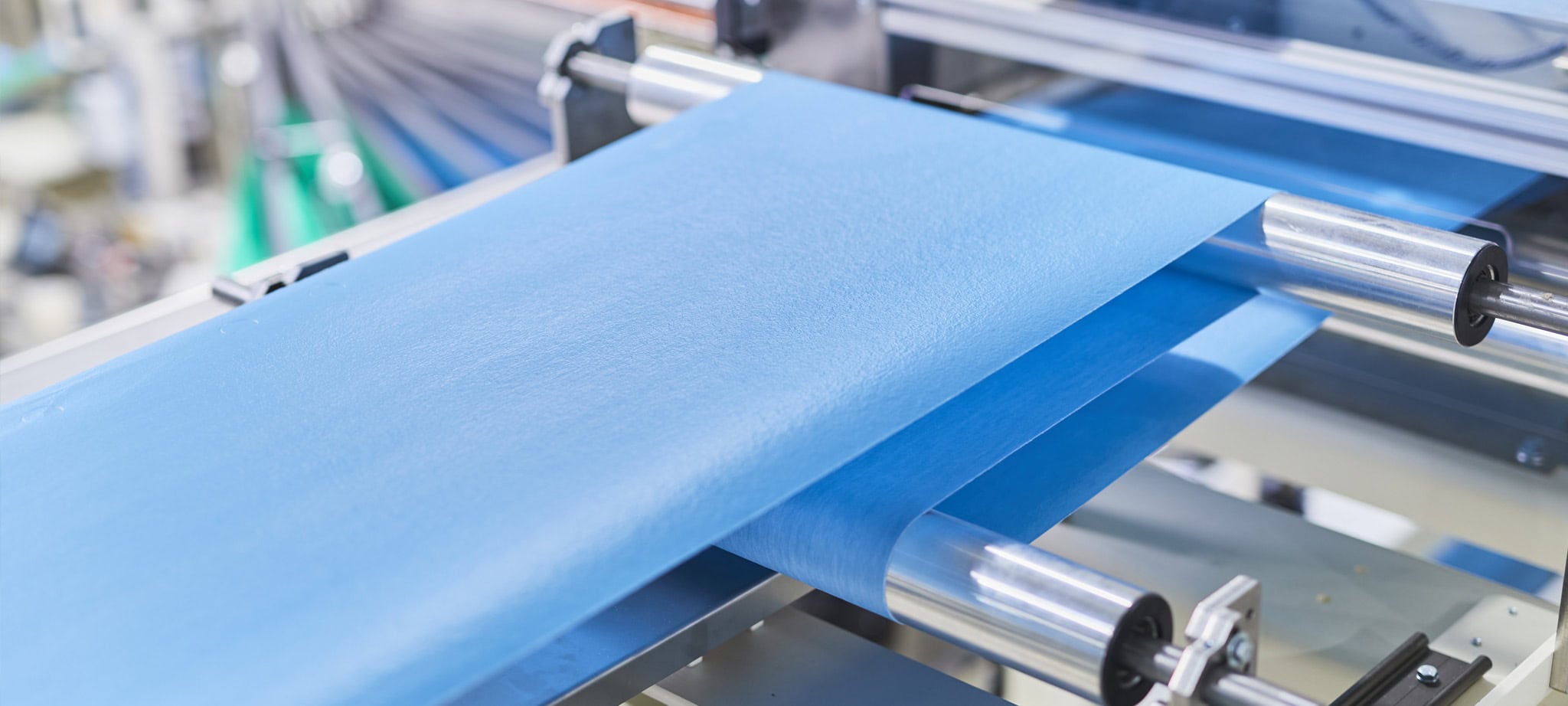
We slit nonwoven webs for medical devices to a clean, low-dust edge.

Hygiene and Care
We run nonwoven and paper lines for wet wipes, towels and care products.

Filtration
We slit nonwoven filter media to width for filtration products.
Food
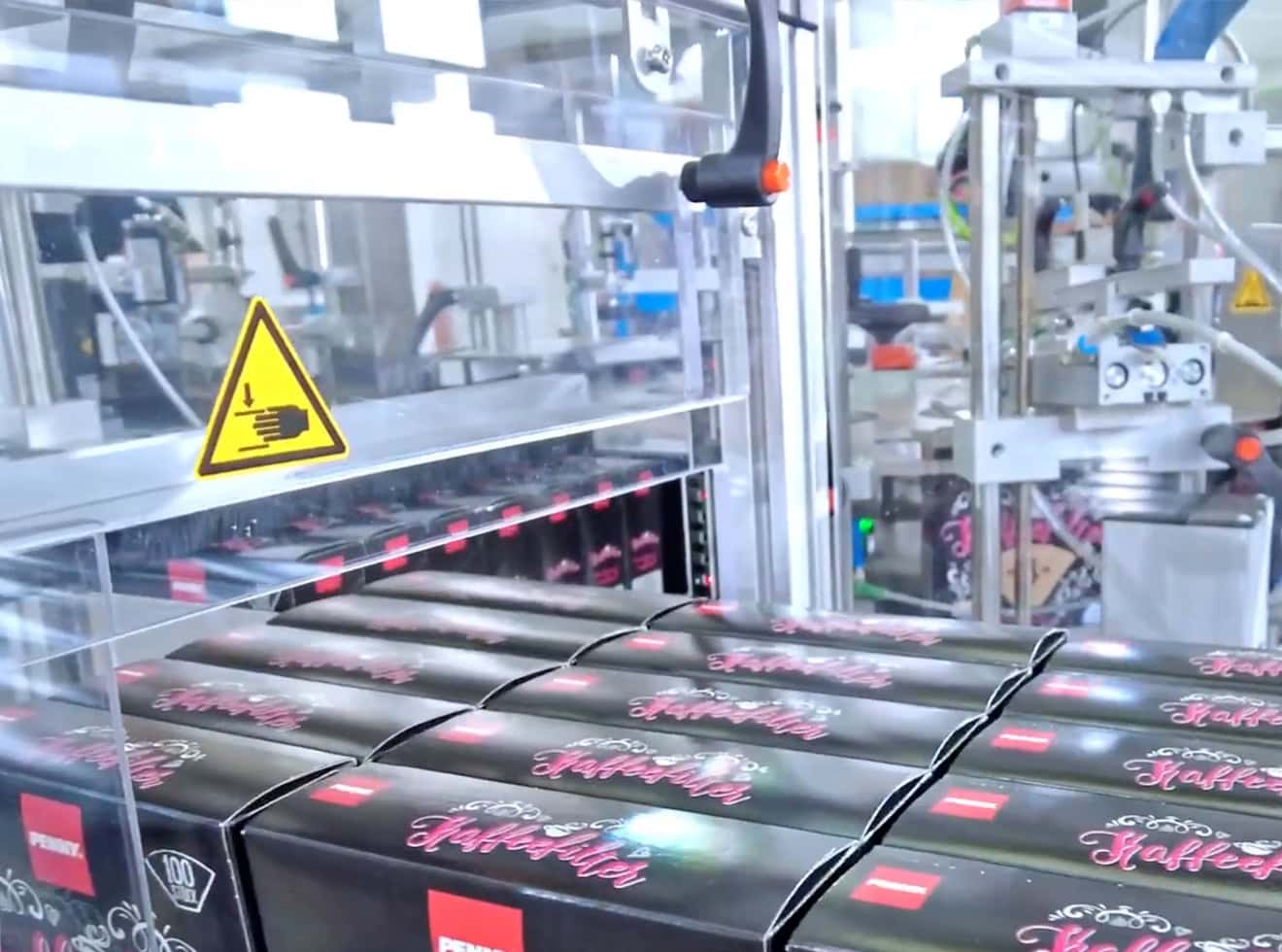
We build paper lines for coffee filters, baking and greaseproof paper and absorbent pads.
What decides whether we can help is your web and your product. If it runs from a roll, describe it.
FAQ: Paper Slitting Machines and Inline Slitting
What Is a Paper Slitting Machine?
A paper slitting machine, often called a slitter rewinder, unwinds a wide master roll, cuts it lengthways into narrower webs and winds them back into finished rolls. On our lines, slitting is one station in a larger converting process. The web is slit in the same pass as the other steps your product needs, or a slitting module is added to a line you already run. The order of the stations and the cutting method follow your material and your finished widths.
Razor, Shear or Score Slitting: Which Suits My Material?
The material and the edge decide. Thin films and film laminates take a razor cut. For the cleanest edge on almost any web, a shear cut works best. Nonwovens, coated and abrasive webs and thick laminates take a crush or score cut, which is the usual choice for our nonwoven and laminate work. Tell us your material and the edge you need, and we will match the method to it.
Do I Need a Separate Slitter Rewinder or Slitting in the Line?
It depends on how slitting fits your process. A separate slitter rewinder is its own step: the processed roll is wound, moved and slit on a second machine. Slitting in the line puts the cut in the same pass as the rest of the converting, so you save a machine and the moves between steps. Where the slit belongs between other steps, or you want to add it to a line you already run, inline slitting and retrofit are our field. Tell us your process and we will say which route fits.
Can You Retrofit a Slitting Module into a Line from Another Manufacturer?
Yes. We fit a slitting module into a line another manufacturer built, or one bought second-hand, including lines whose original manufacturer is no longer available. What matters is that the new module works with your existing control system and the web handling of the line. That way you add a lengthways slit to a running line without replacing it.
Do You Deliver to North America, and How Does Remote Service Work?
Yes. We have delivered more than 1,000 projects worldwide and build to UL or CSA for North America where the market requires it. After handover one contact stays with the line. Service runs through remote access over a secured VPN connection for anything that can be solved that way, and through a technician on site when it cannot. Genuine spare parts ship from Germany. Engineering, installation, commissioning, training and after-sales come from one supplier, so you have one party responsible for the line over its life.
Send Us Your Material and Target Widths
Tell us your material, your web width and the finished widths you need, and we will come back with a clear feasibility assessment.
Let’s Talk about Your Slitting Project
Write to us and we will get back to you quickly.